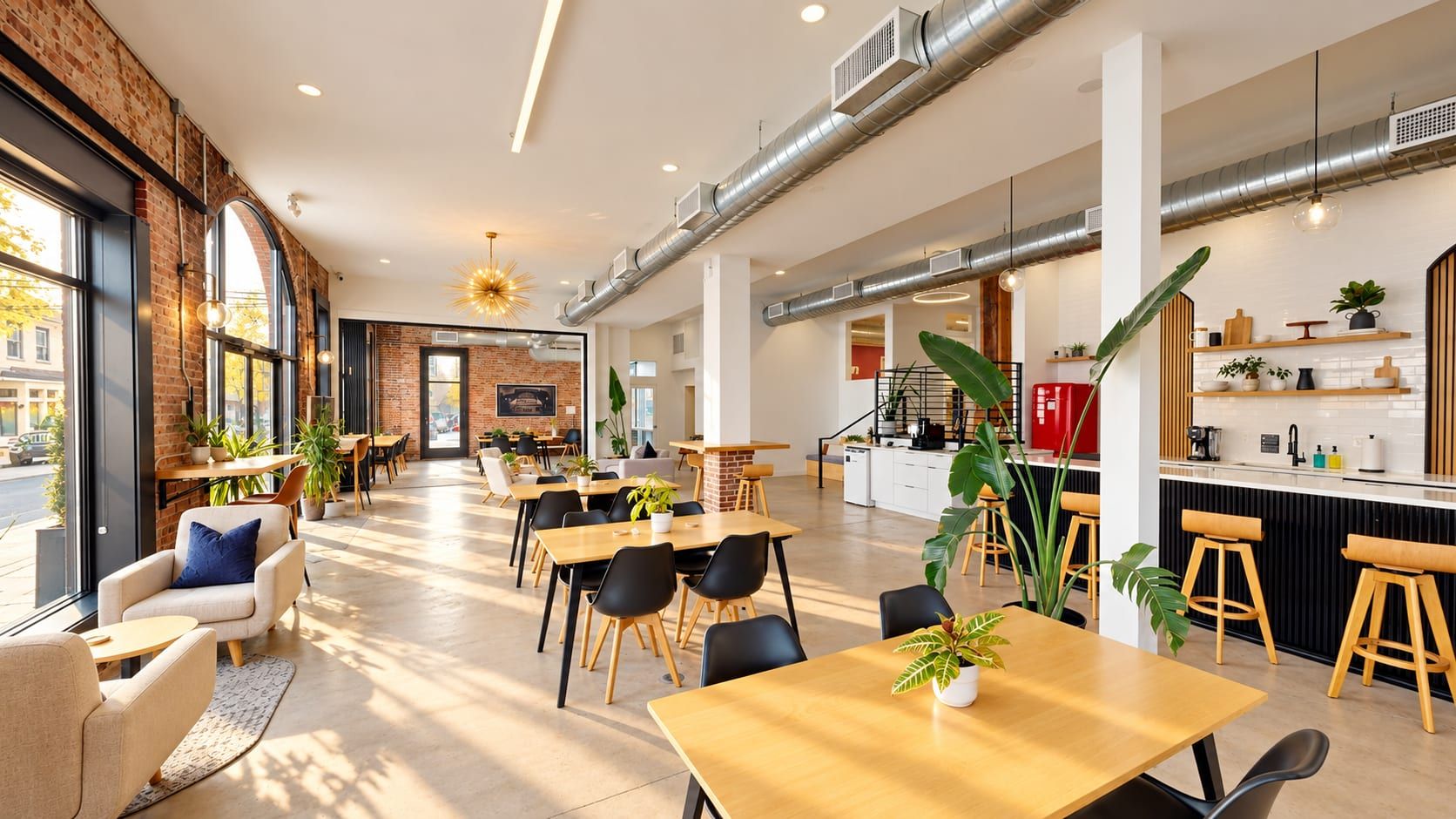
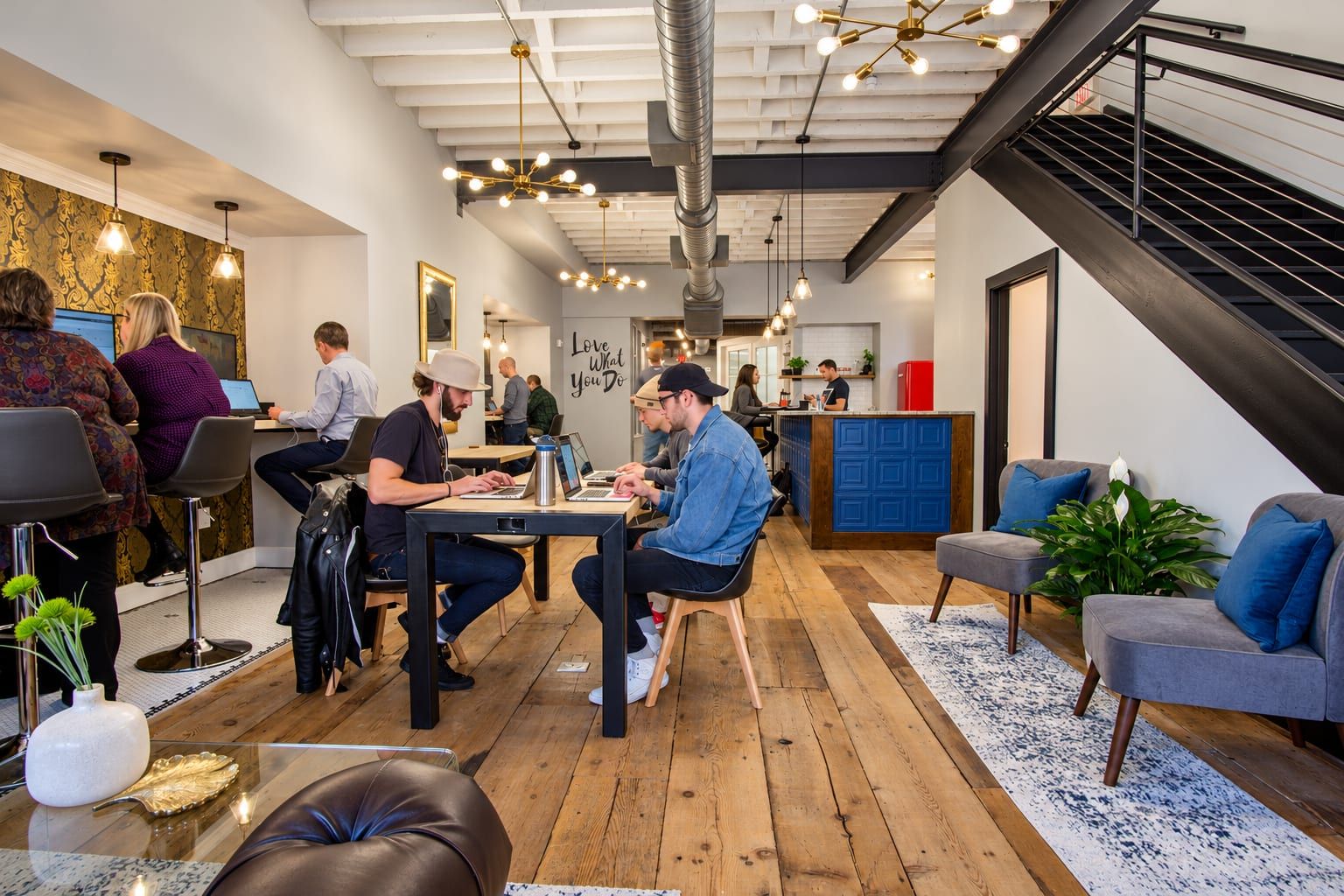
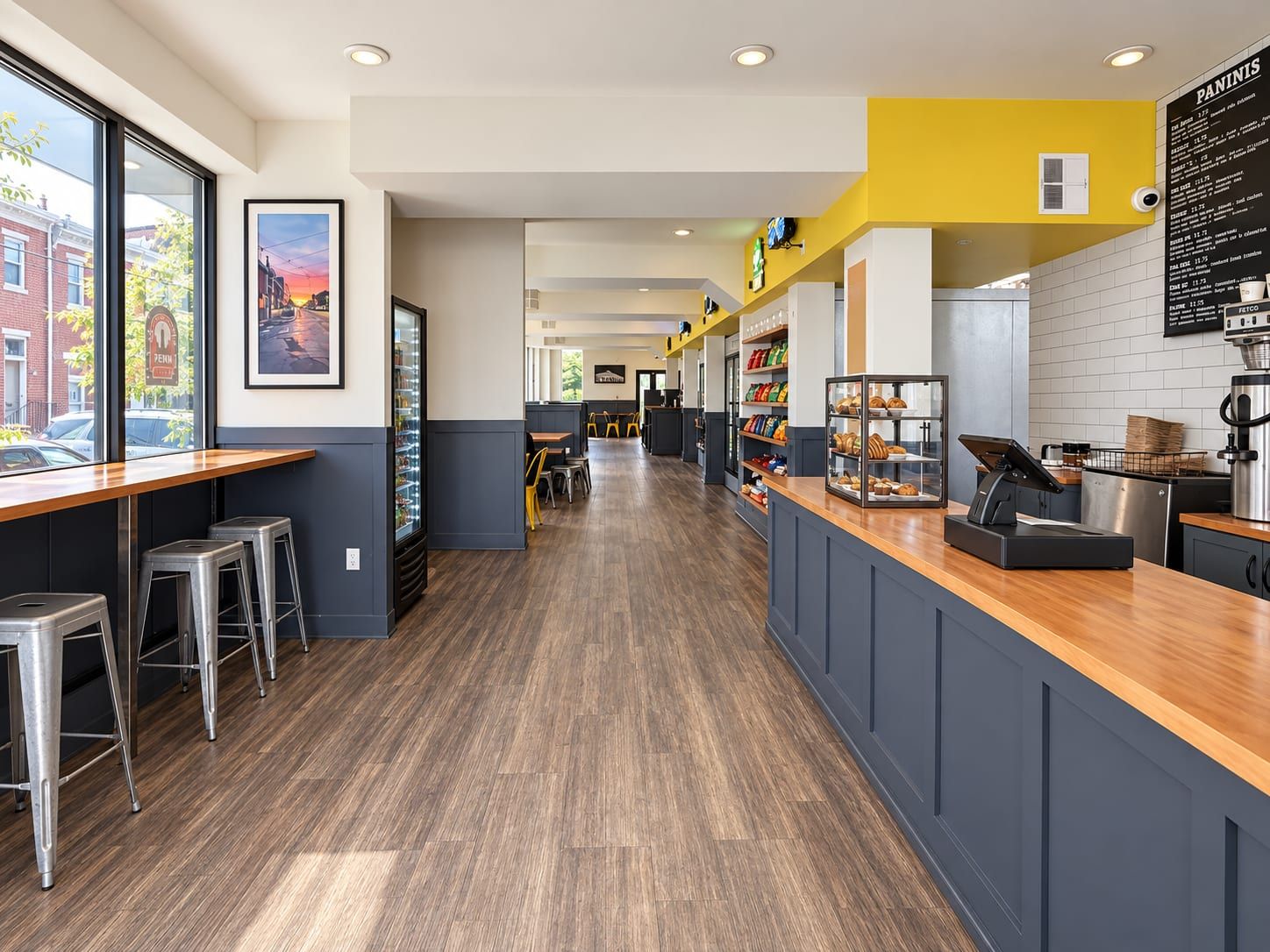
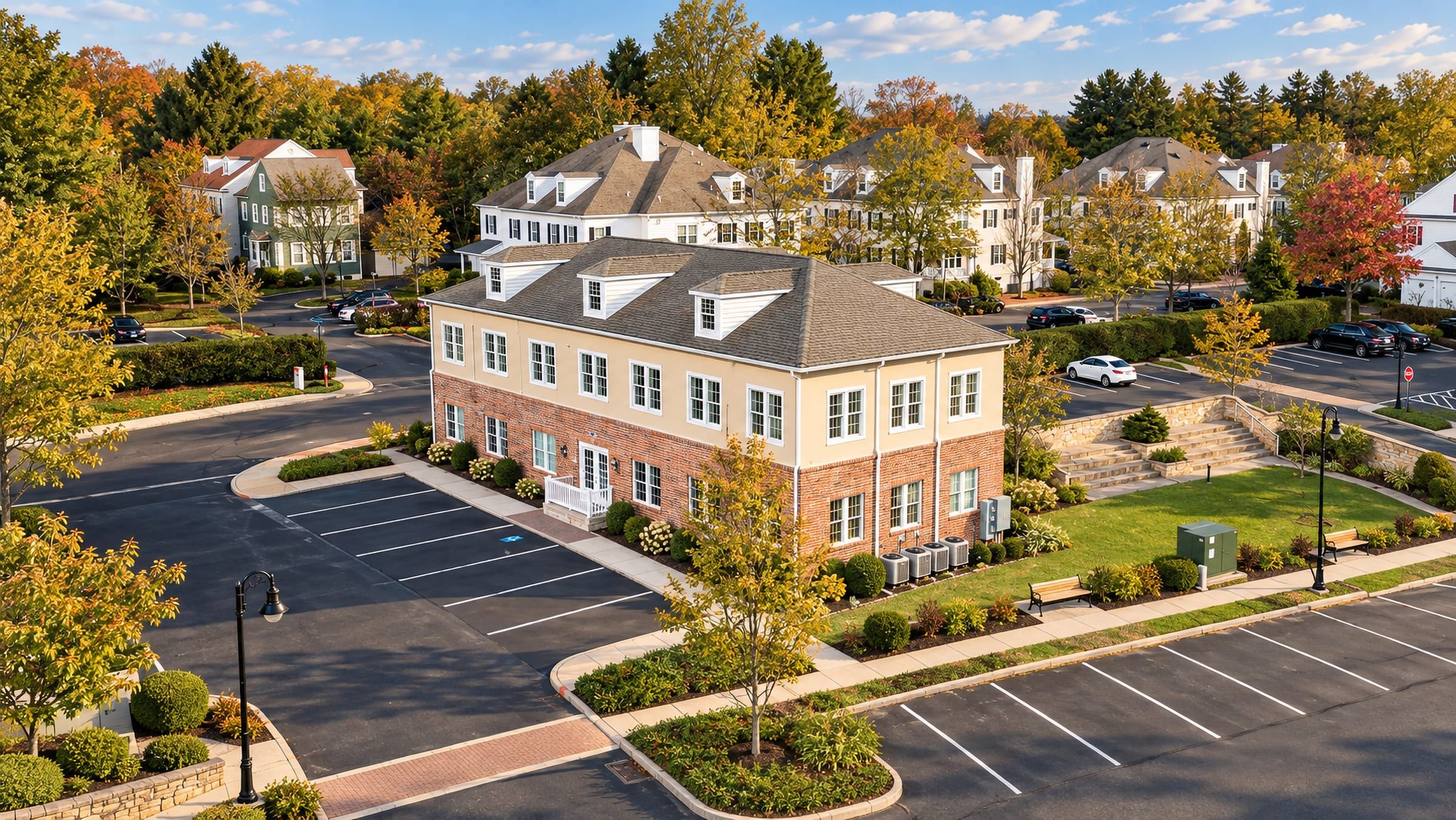
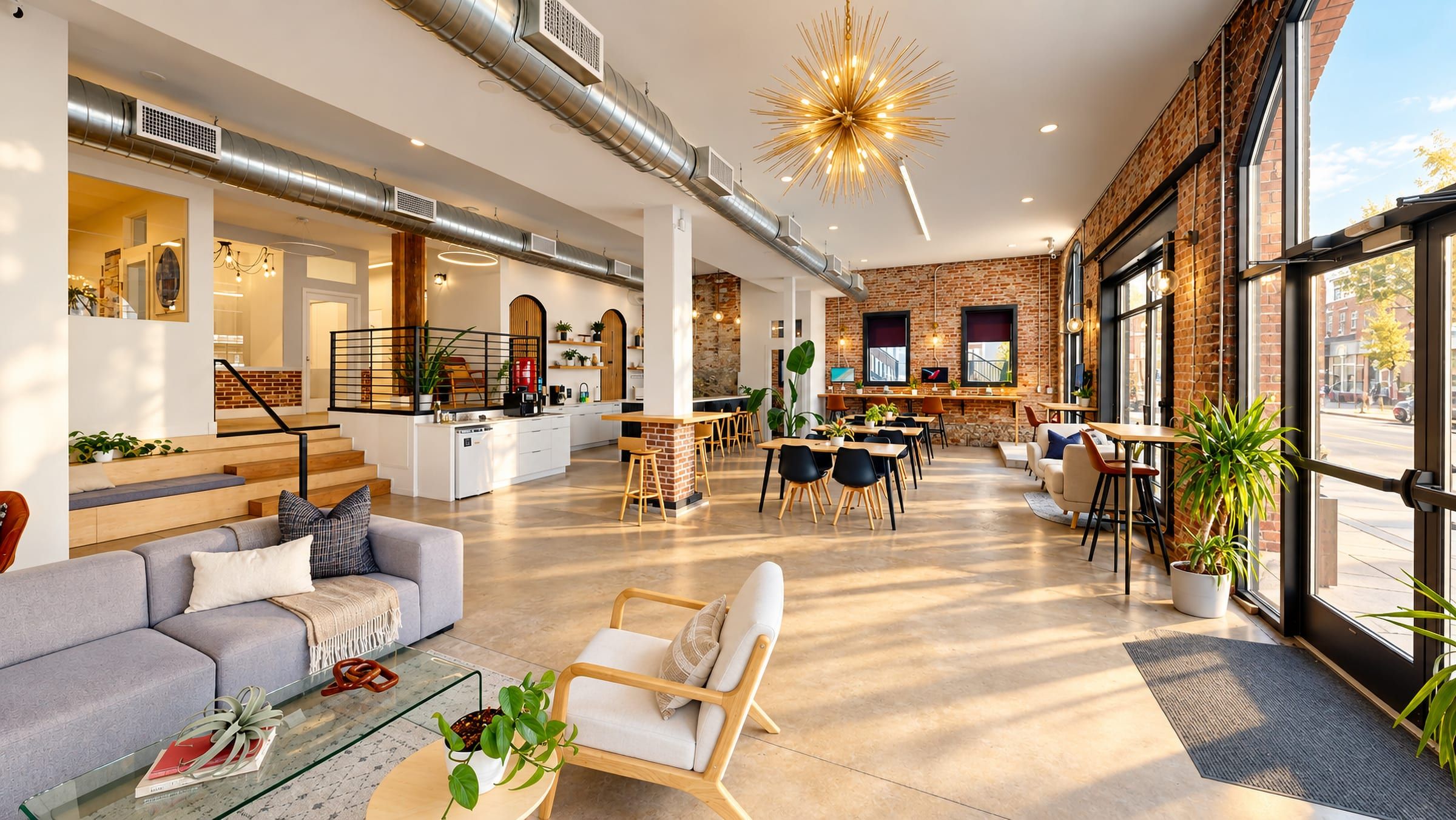
Sofa and chairs under a brass chandelier, brick walls and the tall front windows

Make the space part of the business.

The entrance, the layout and the atmosphere all shape how people experience a business. We design offices, shops, hospitality spaces and other commercial projects that welcome customers and support the people working there.

Work2gether Phoenixville · Completed

The Campus, Downingtown · Completed

From roller rink to sports facility.

What was there, what we added, the entrances we explored and what was built.

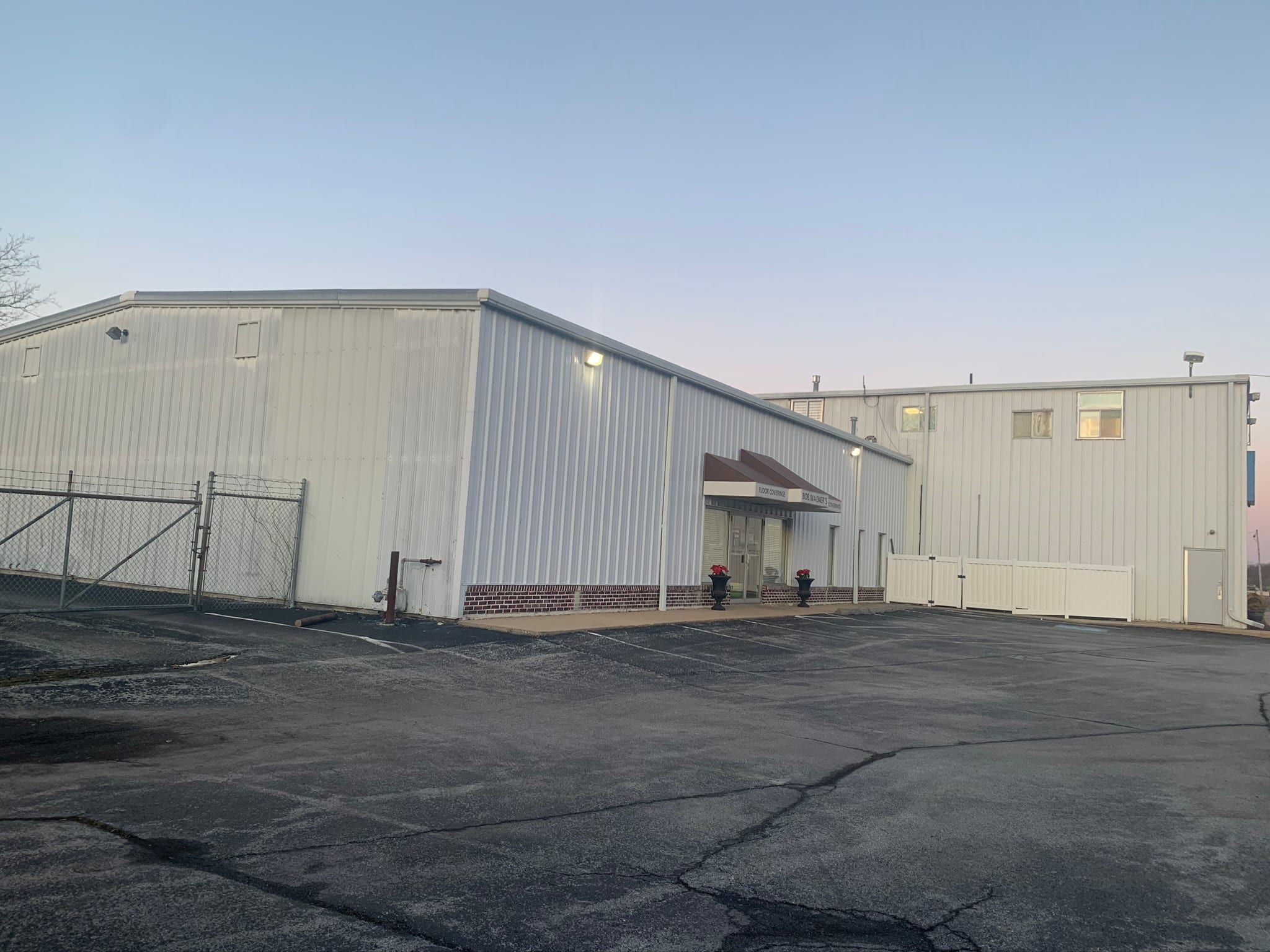
Existing metal building and parking lot before the addition
New: two-story additionExisting rink building
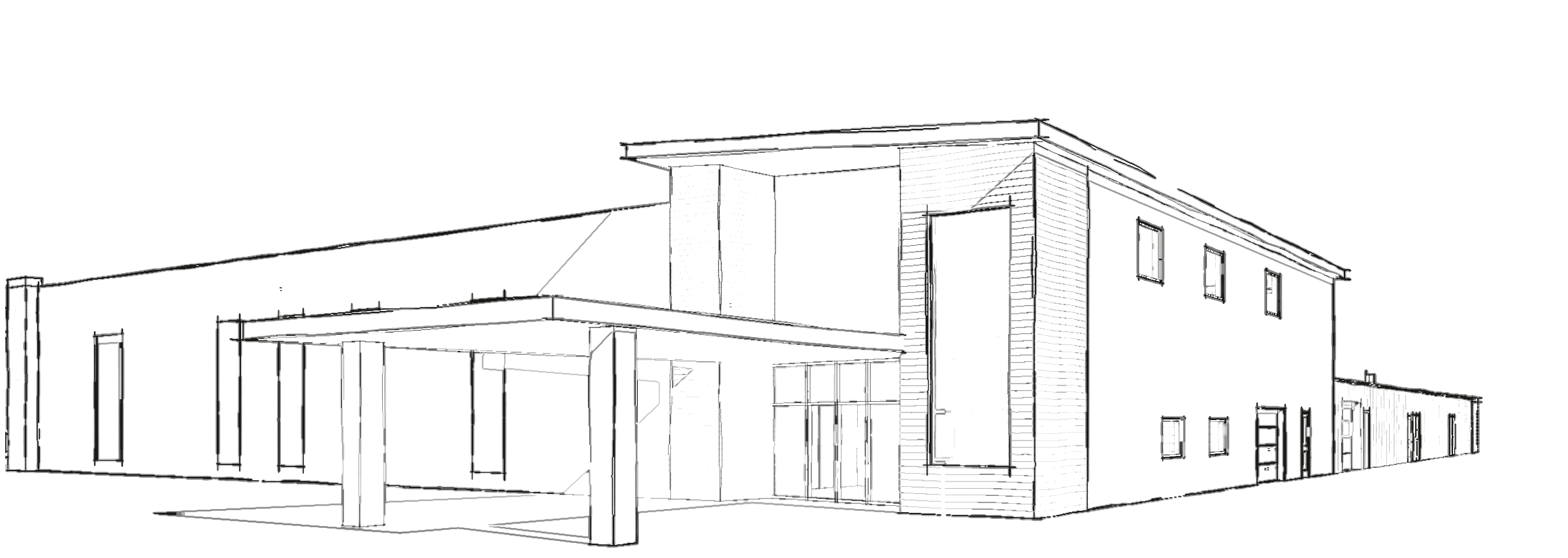
Entry option 1: a flat canopy on square columns in front of a two-story entry block
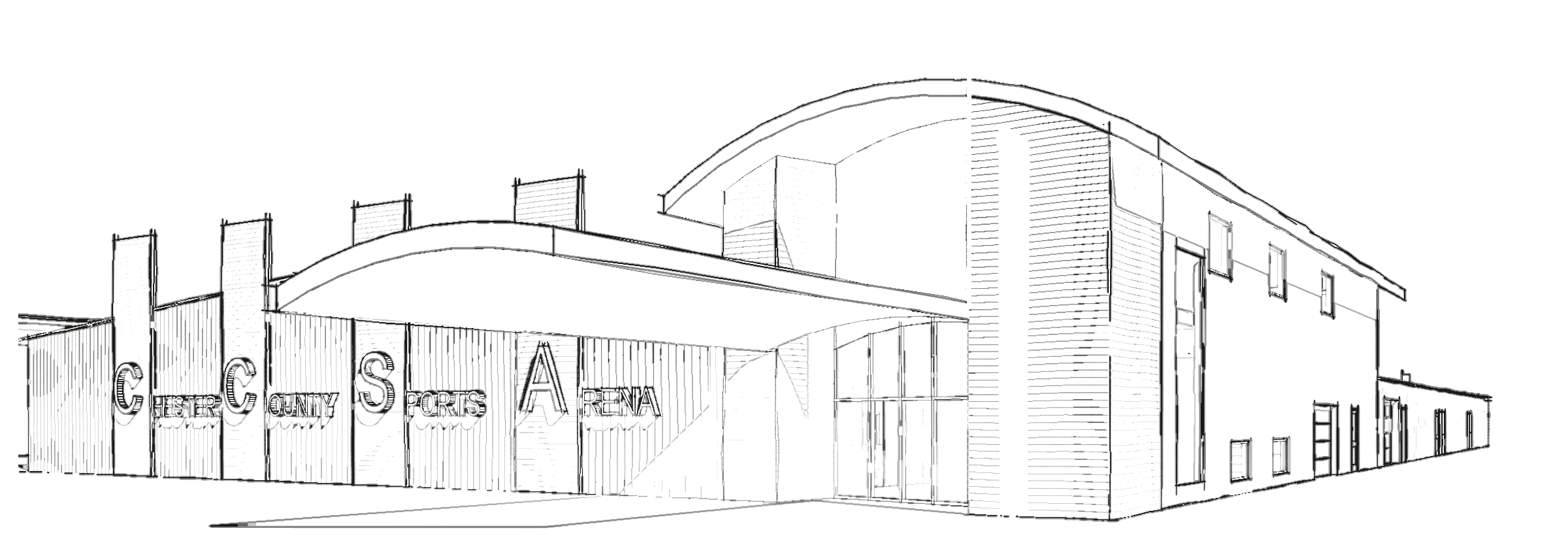
Entry option 2: a curved canopy and curved roof with the arena's name in large letters
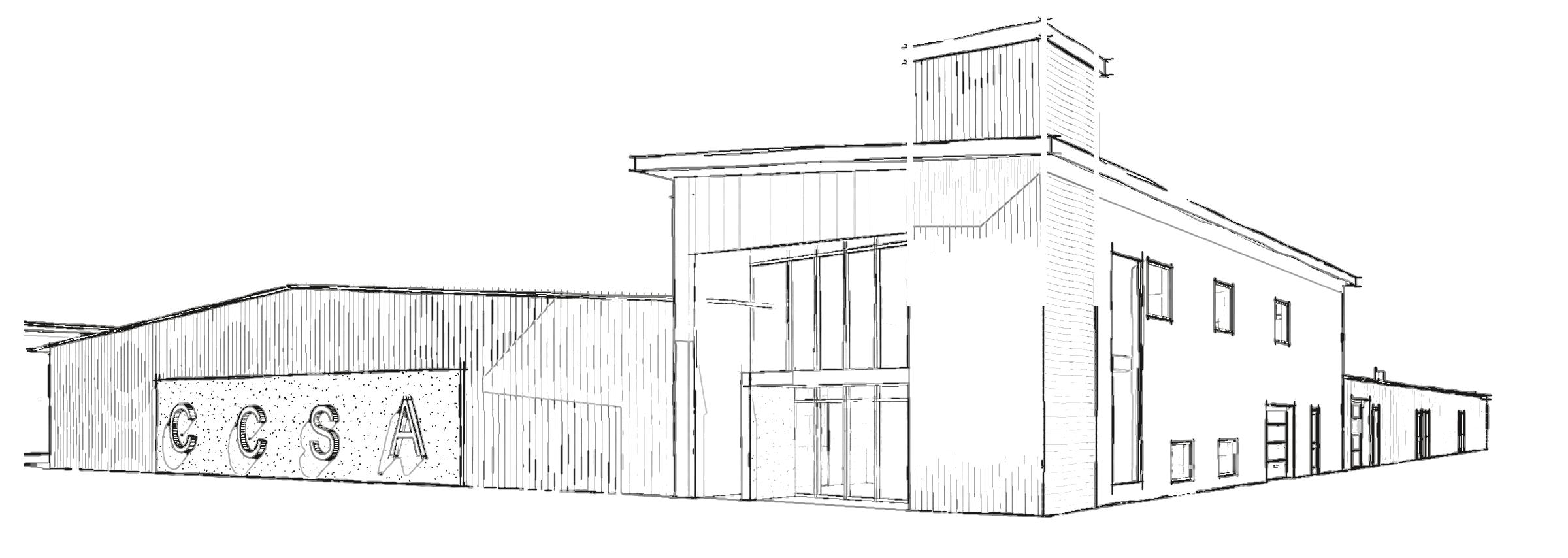
Entry option 3: a tall glass entry under a raised tower, initials on the metal wall
Entry option 4: a framed entry box with a graphic sweeping across the metal wall

Entry option · March 2020 · not built

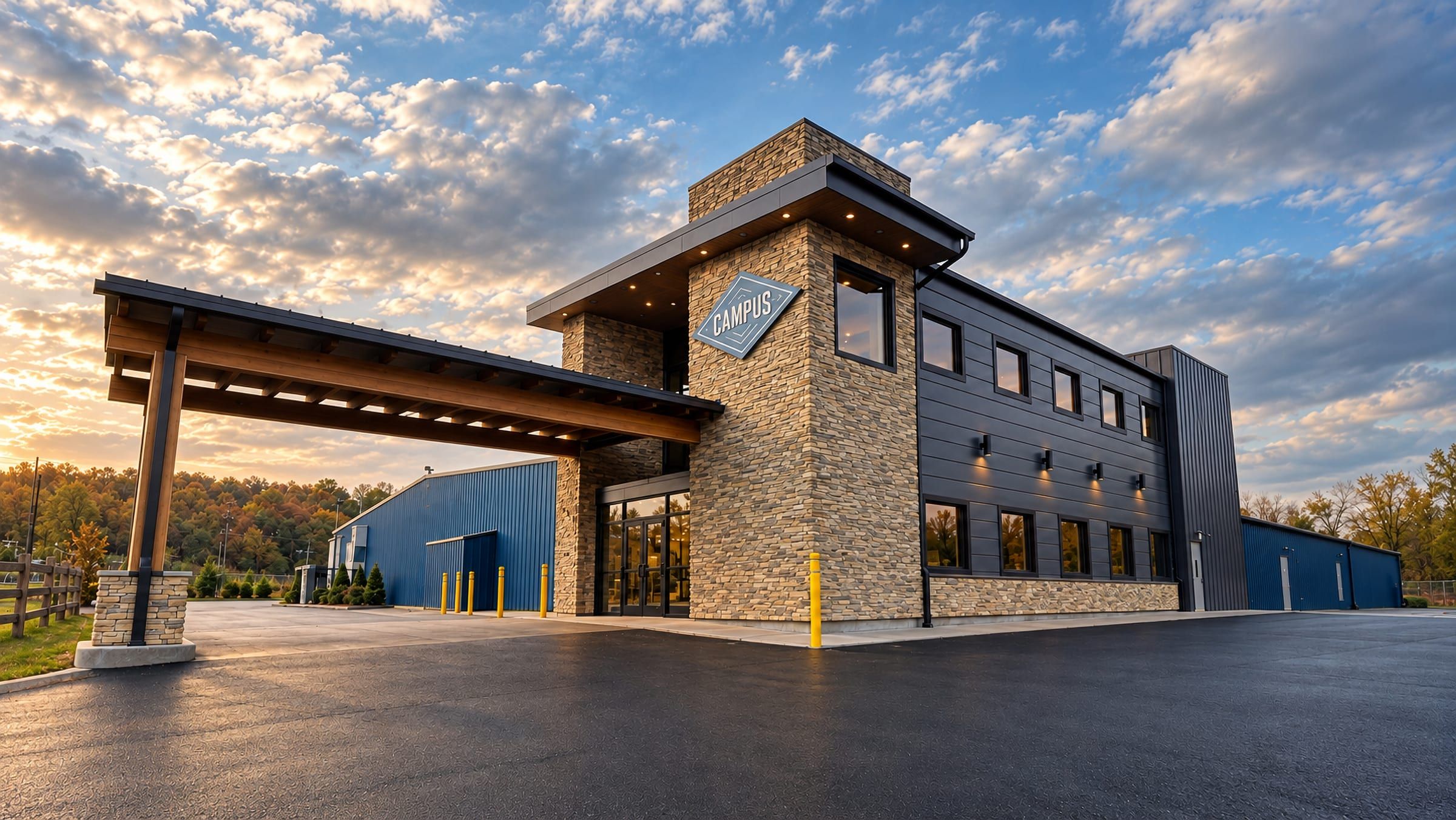
The new entry: a stone tower and timber canopy in front of the metal sports buildings
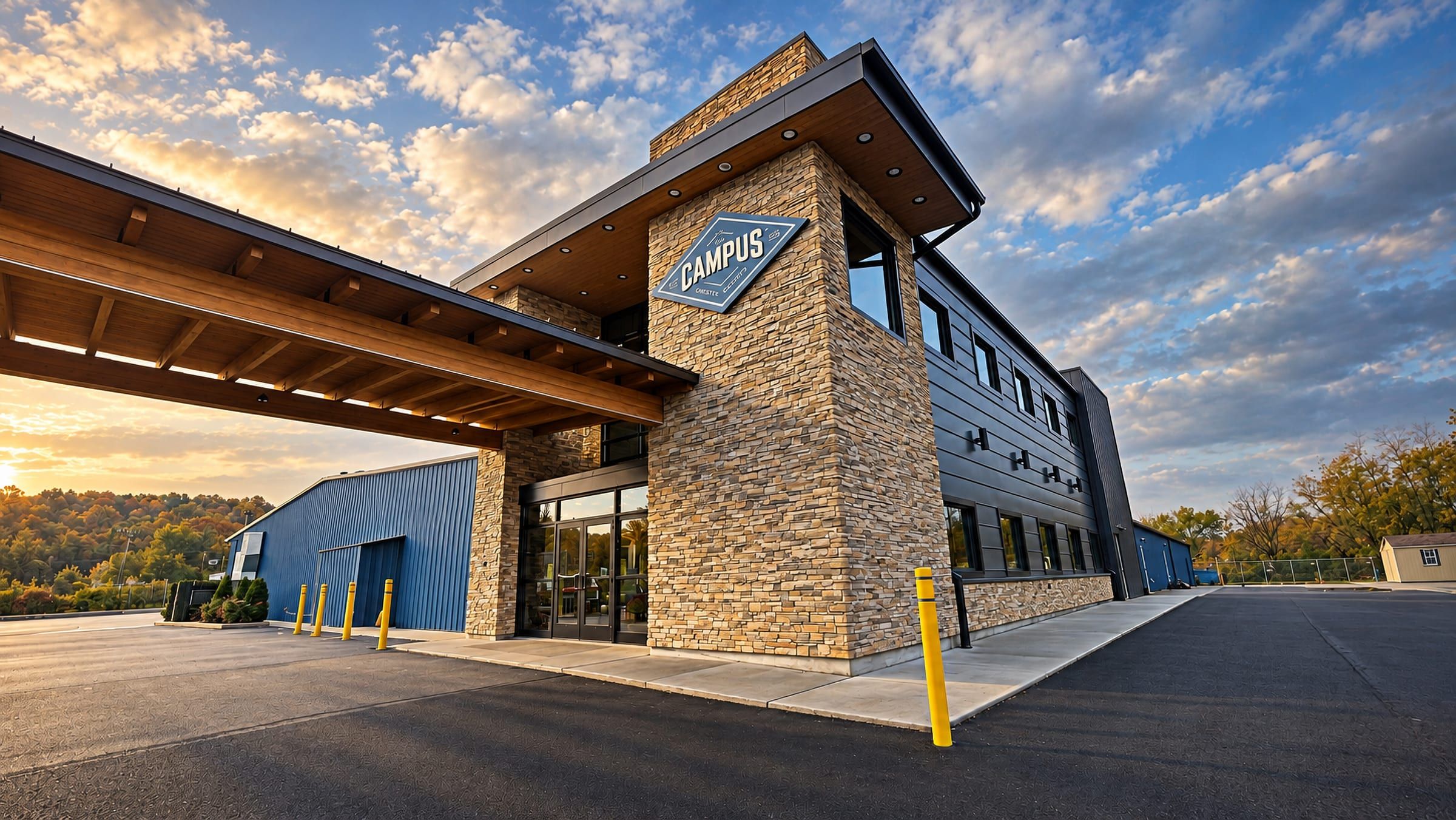
The stone tower with the Campus sign and the timber canopy over the drop-off, seen from the corner of the parking lot
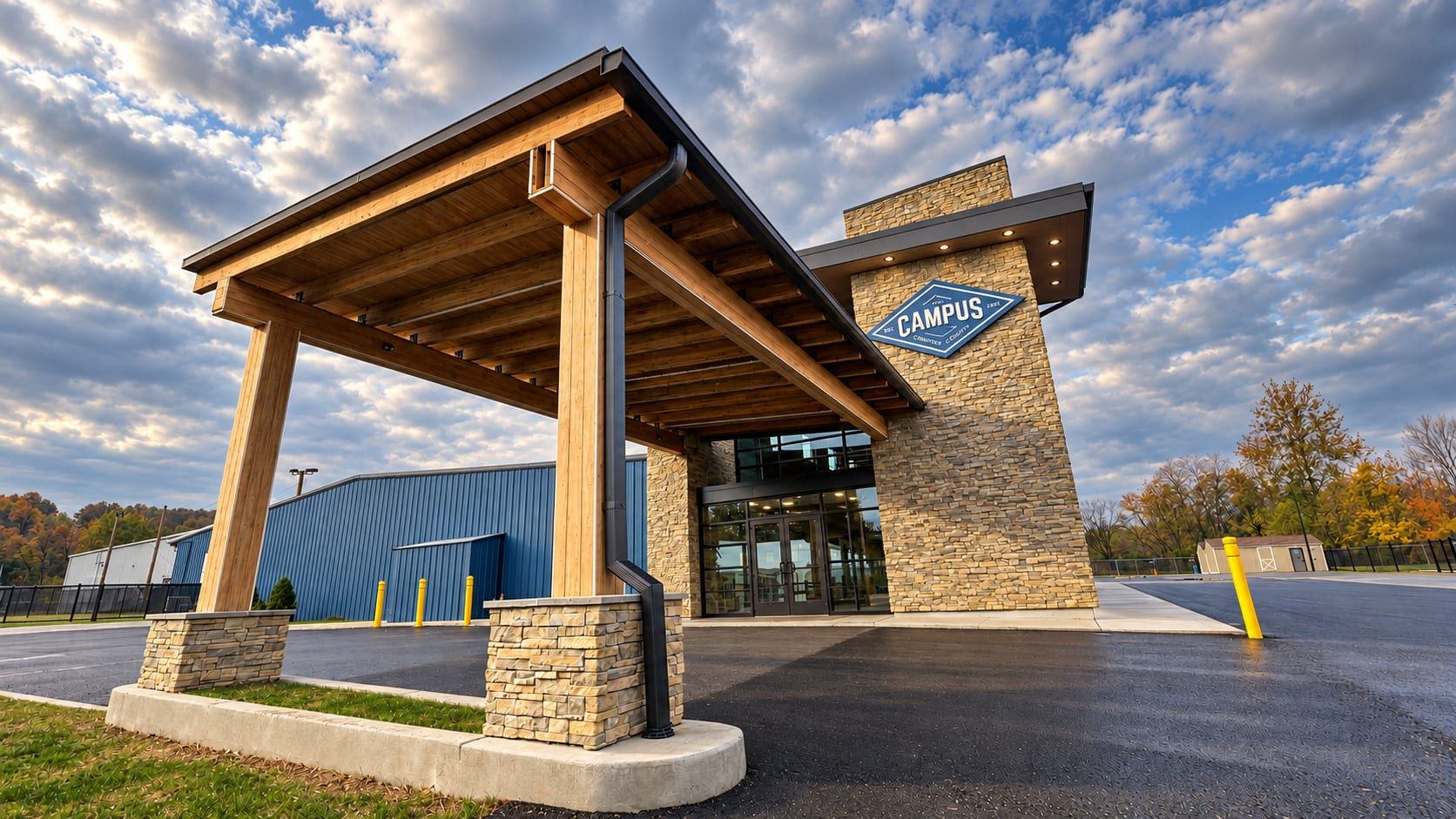
The timber canopy and stone tower at the entry
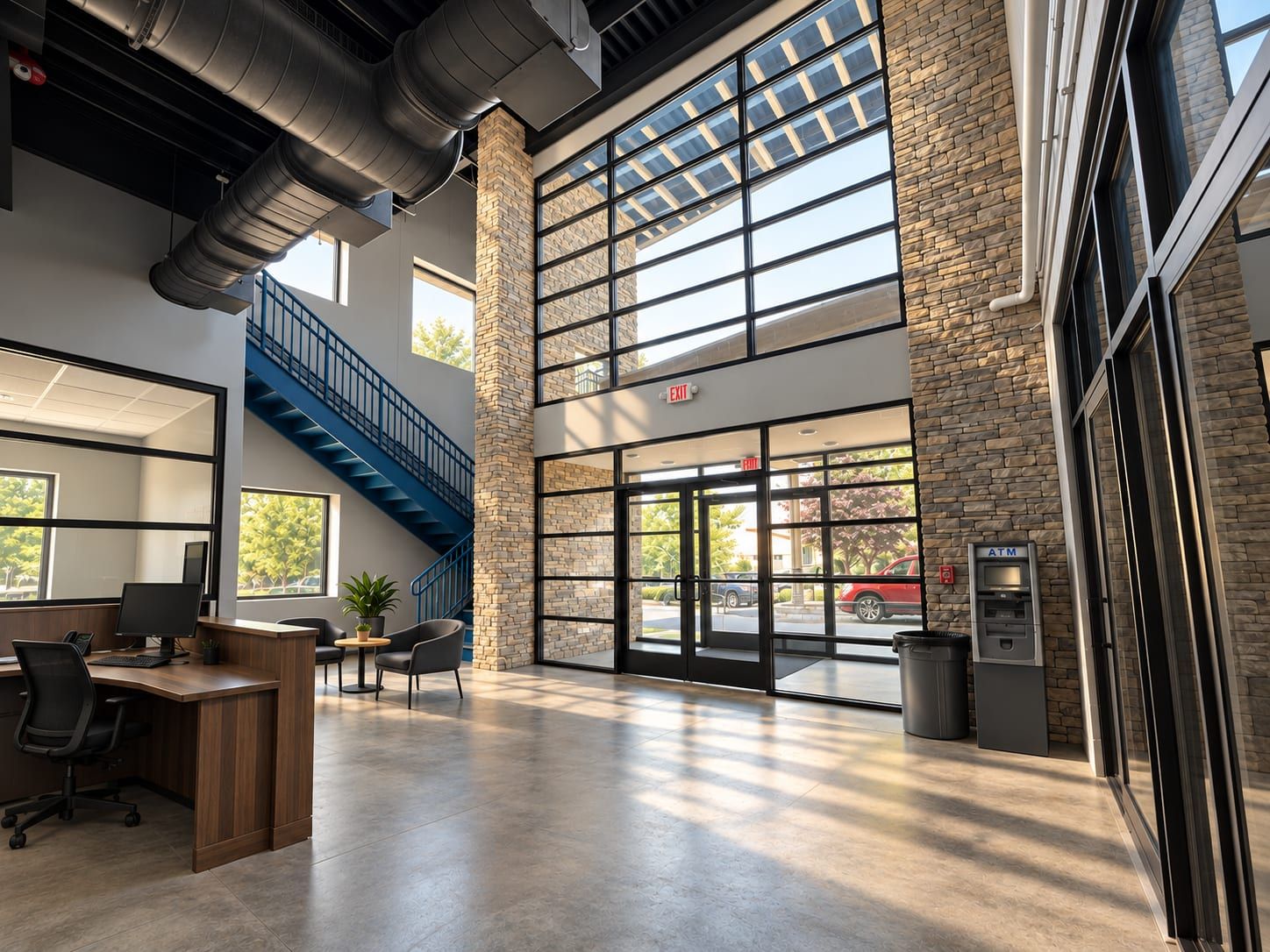
The two-story lobby: steel window wall, stone, the stair to the mezzanine and the front desk
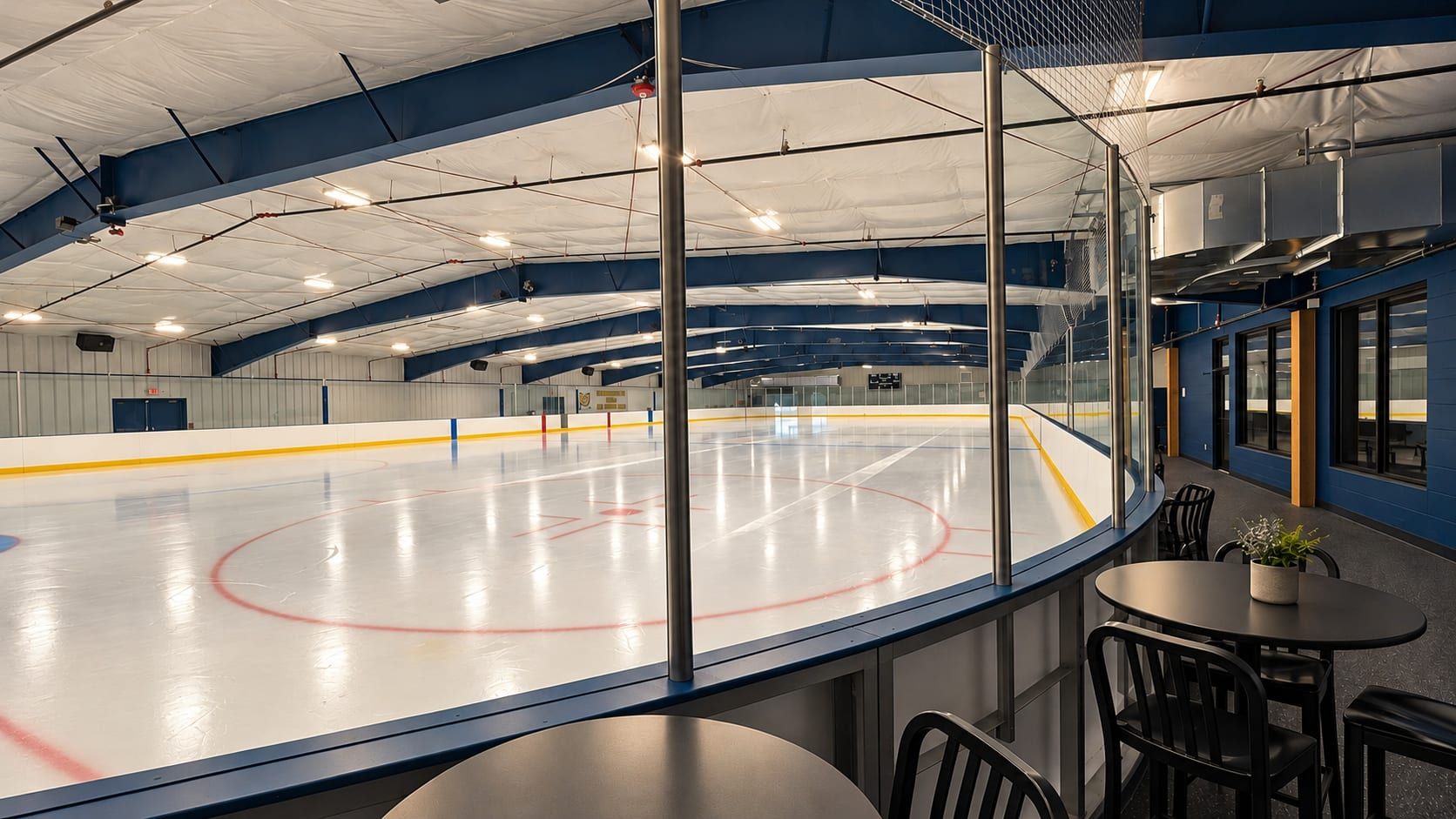
The ice rink seen through the curved glass of the lounge
123Lobby beyond

Built

Before · roller rink · 2020

Expansion · drawings · 2020

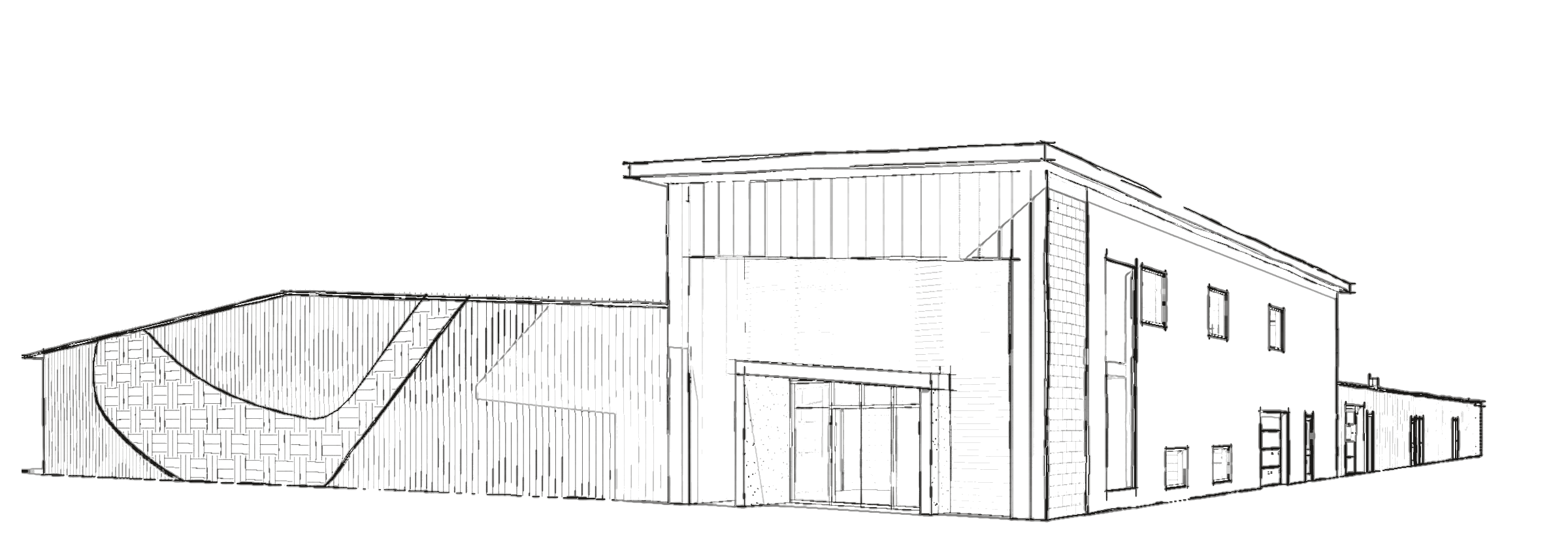
Before the work: the roller rink from the parking lot, 2020.The front elevation, simplified from our June 2020 drawings: the addition in gold, the existing rink building in gray.Option 1 of 4, March 2020. Explored, not built.Built: the tower, the timber canopy and the two-story addition.

A roller rink

The Campus started as a roller rink in a plain metal building along the highway, its entrance easy to miss.
Kept, added to, converted

We kept the rink building and built onto it. Inside, the skating rink came out and an ice rink went in.

Kept
The one-story rink building, about 23,000 sq ft
Front
A two-story addition, about 4,200 sq ft: the entrance, lobby and offices
Rear
A one-story addition
Inside
An ice rink, with a viewing area, locker rooms and dining

Four ways in, from one viewpoint

In March 2020 we drew four entrances from the same viewpoint, so the owners could compare them side by side. Choose one on the drawing.

1 · Canopy
A broad canopy shelters the entrance, with a two-story block marking the point of arrival.
2 · Curved roof
A curved roof gives the entrance its own profile, with large lettering readable from the road.
3 · Tower
A taller entrance, easier to recognize from a distance, with glass opening up the arrival space.
4 · Framed entry
A projecting frame marks the doorway, with a large graphic across the existing front.

Easy to find, arrive at and walk into

The final design brought together the tower and the canopy from the options. The tower makes the entrance easy to find from the road, the canopy shelters the drop-off, and the two-story lobby brings everyone into one place.

1 · Find it
The stone tower, seen from the road and the parking lot
2 · Arrive
A heavy-timber canopy over the drop-off
3 · Enter
One two-story lobby for everything, the rink beyond

Designed for the way your business works.

A commercial project has to balance the impression it makes with the work happening behind the scenes. We plan for both, from the first view through the front door to storage, staff circulation and deliveries.

A clear welcome. We consider the approach, entrance and first few steps inside, making it easier for people to understand where to go.
A layout that works. Customer areas, workspaces and support spaces need to fit together. We develop the plan around how the business actually operates.
A new use for an existing building. We identify the features worth keeping and the changes needed to accommodate the new use, coordinating the layout with building systems and accessibility.

Services

Spaces for a business, new uses for older buildings, additions, new buildings and the approvals a new use needs.

Typical scope

  • Existing-conditions documentation of the space or building.
  • Layouts for the business: customer flow, staff areas, storage and restrooms.
  • Accessibility planning, and MEP coordination for commercial systems.
  • Permit drawings for the fit-out, and finish, fixture and furniture selections when you want interior design as well.

Permits and approvals

  • Opening a business or changing the use may need a Certificate of Occupancy as well (below).
  • Food service needs Health Department plan review, which can run alongside the building review.

Helpful to send

  • The address and suite
  • What the business does, and roughly how many people use the space
  • Whether you own it, have signed a lease, or are deciding, and when
  • Any landlord drawings or a lease exhibit

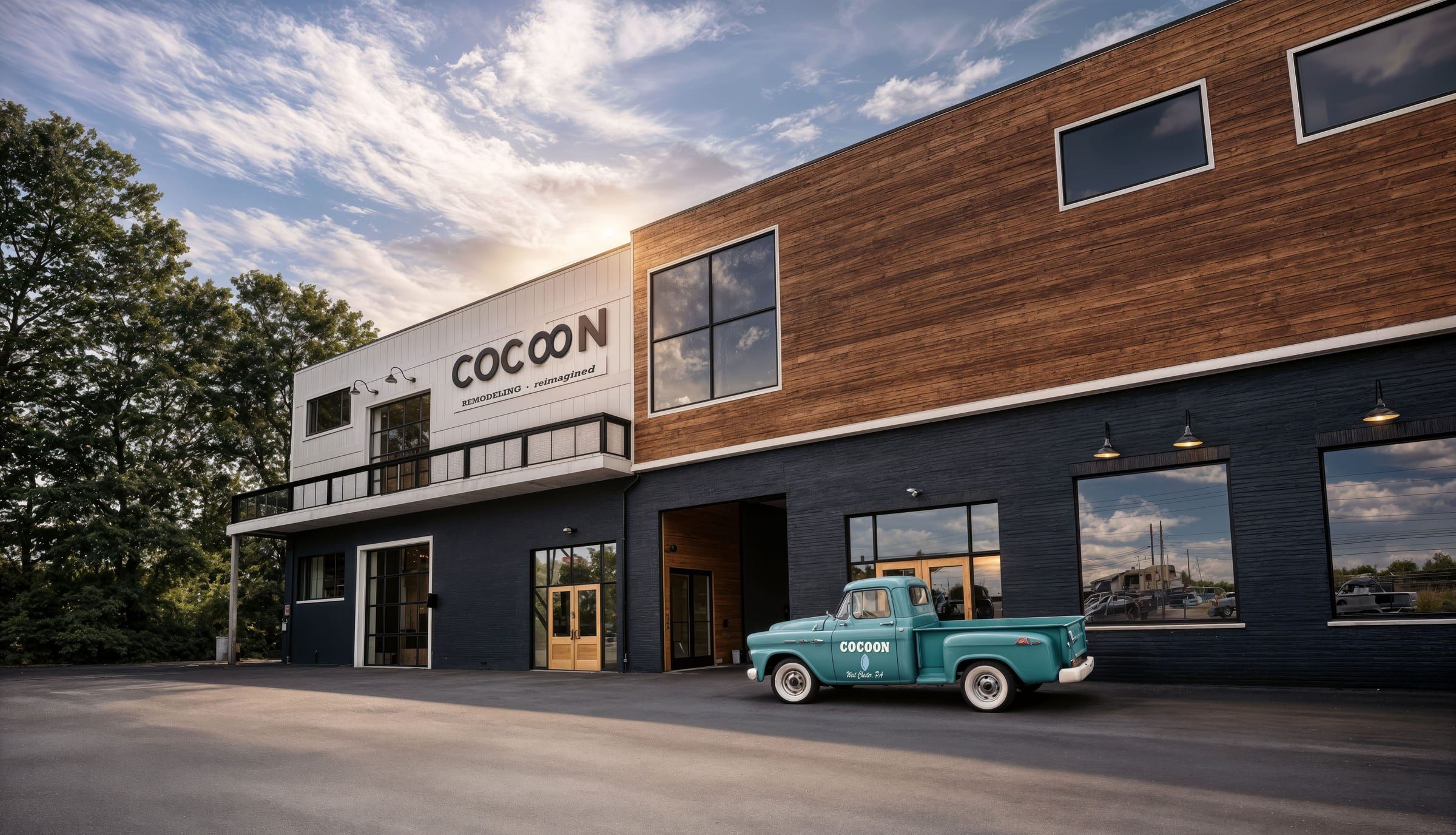
ProjectsWork2gether PhoenixvilleCocoon BuildingRybrew BrewerytownTalk about your space

Typical scope

  • Existing-conditions drawings of the buildings on the site, from our scan.
  • Concept options for the addition, entrance or exterior, in 3D views, and renderings when they help.
  • Permit drawings coordinated with the structural, MEP and civil engineers the building needs.
  • Drawings for local historic review when the site is in a historic district, and construction administration when you add it.

Permits and approvals

  • Suburban building departments review the drawings under the Pennsylvania or New Jersey Uniform Construction Code.
  • The zoning officer checks the use, setbacks, height and coverage; relief goes to the zoning hearing board or board of adjustment.
  • In a historic district, exterior changes go through the local historic review.

Helpful to send

  • The address
  • What the business needs the space or building to do
  • Any site survey and existing drawings
  • Your timeline, and any date that drives it

ProjectsThe CampusCocoon BuildingDoylestown OfficeTalk about a building

Typical scope

  • A look at the space and its approved use, ideally before a lease is signed.
  • Plans showing the use, exits, life safety and accessibility for the application.
  • Drawings for any work the new use requires, and for legalizing earlier unpermitted work.

Permits and approvals

  • A change of use or opening a business may need a Certificate of Occupancy; it is applied for with the City or township like a permit.
  • Unpermitted work is usually legalized with a regular permit.

Helpful to send

  • The address and suite
  • What the space was used for before, and what you plan
  • Roughly how many people will use it
  • Your lease or opening date

ReadBefore you sign a commercial leaseTalk about a change of use

Typical scope and general guidance on approvals. Your proposal sets out what your project includes, and your portal tracks the approvals that apply.

Scanning, modeling & visualization

We laser-scan existing spaces and use that information to develop drawings and 3D models for the project. A detailed record of the building gives the design team a clearer starting point for renovations and additions.

Part of most projects that start from an existing building. Also available on its own: a point cloud, with existing-conditions drawings and a 3D model if you need them.

Explore an existing building remotely and return to it as questions arise. Digital walkthroughs help clients and project teams understand the spaces without relying on photographs alone.

Available for the buildings we scan, with a link you keep.

See the proposed building, interiors and materials before construction begins. Renderings help communicate the design and make the choices easier to understand.

Added to a project when they help. Also available on their own.

Aerial photographs and video of a site or building, to document the existing conditions or show the finished work and its setting.

Added to a project when it helps.
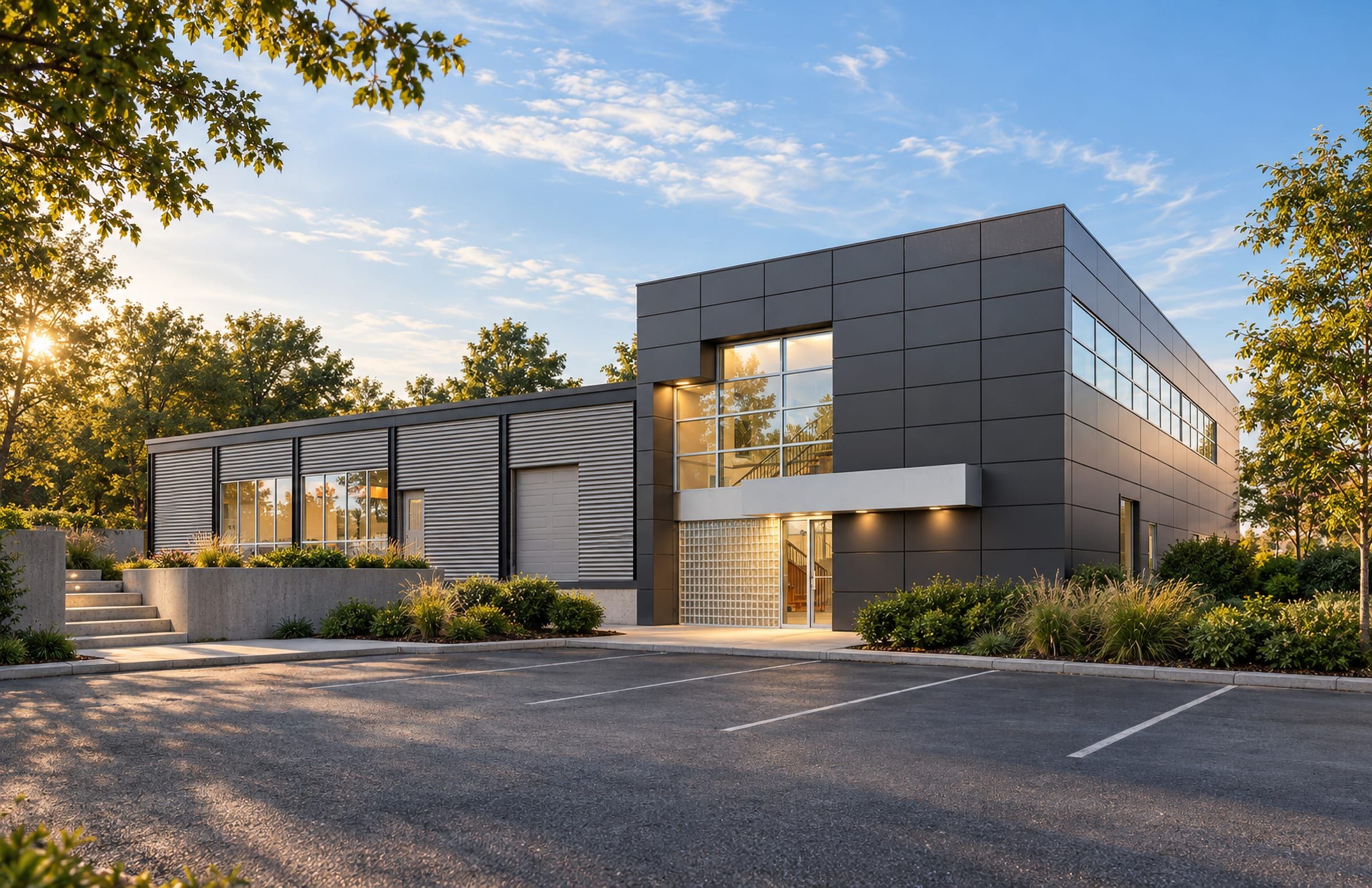
Your proposal lists what is included in your project.

Rendering of a commercial building refaced in dark metal panels, with a glass entrance at the corner of a two-story block
American Avenue: a rendering of the proposed exterior.

How it runs

We start with the space and the use it is approved for, plan the layout around how the business runs, then draw the permit set with the engineers it needs.

  1. 01The space and the use
  2. 02Existing conditions
  3. 03Layout
  4. 04Permit drawings
  5. 05Filing

Your proposal sets the schedule for your project. How we work, in full · Fees & timelines

Questions people ask

Yes. Whether the space allows your use, what accessibility and code upgrades it may need, and what approvals are ahead can change what a lease is worth.

Yes — we coordinate with landlords, property managers and brand standards, and with your contractor during pricing.

It depends on the size of the space and its systems. Your proposal sets the timeline; MEP engineering, and health review for food service, usually set the pace.

Next step

Tell us about your business and the space.

Opening somewhere new, expanding or adapting a building? Send the address and what you have planned. If you’re considering a lease, let us know your decision date.

Request a fee review Commercial design fees are set by our team, not automatically. Send a few lines about the space and the use, and we’ll follow up.